Vintage furniture is not new. And that's not a disclaimer - it's the defining characteristic.
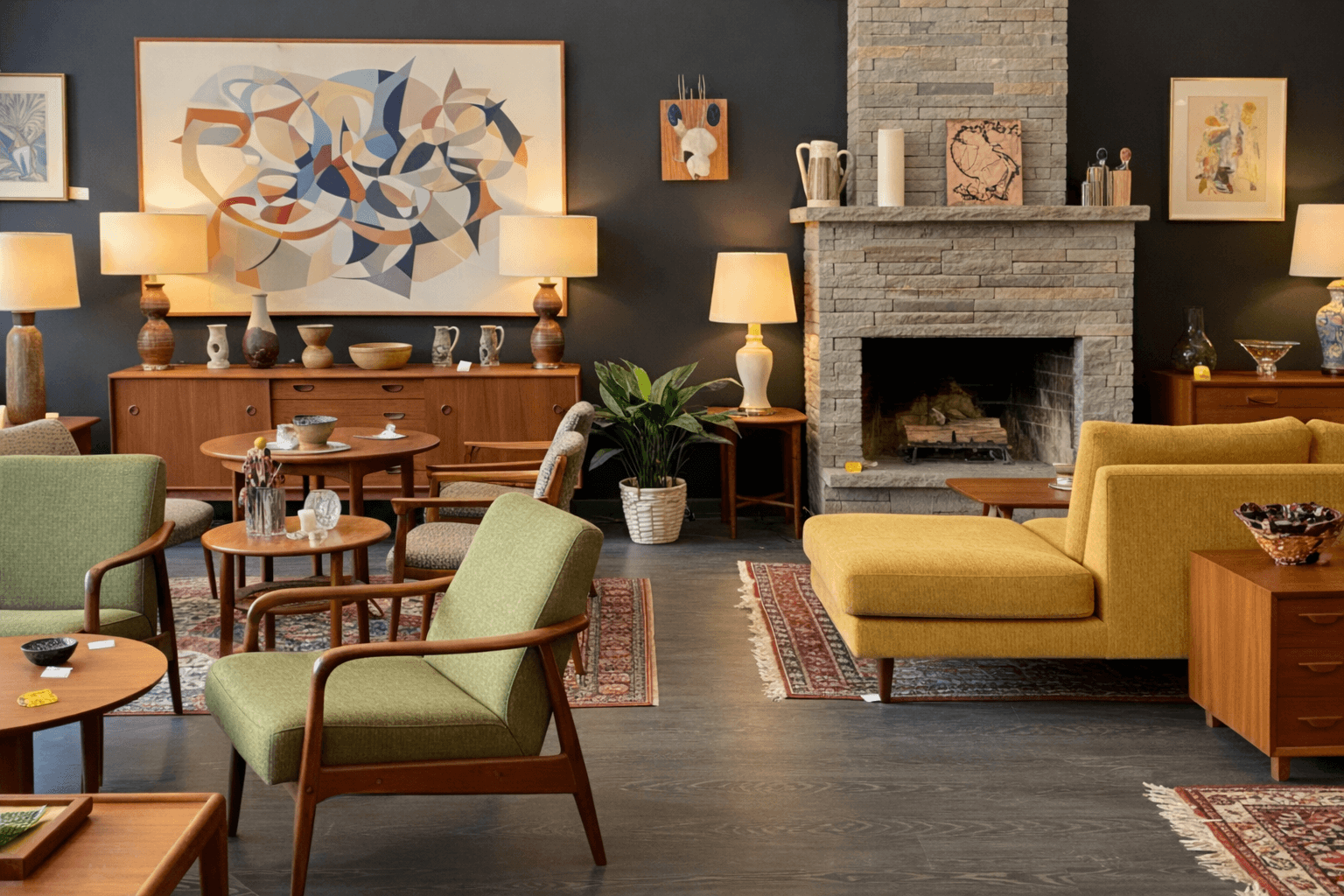
Most pieces at Naked Grain are 50, 60, sometimes 70+ years old. They’ve lived in other homes before yours. They’ve been used, moved, cleaned, repaired, and cared for across decades.
Choosing vintage means choosing something with history, and before you decide, it helps to understand what that really means.
What is vintage?
Vintage is depth. It’s materials that were common in another era (solid wood, veneers, laminates, engineered cores) built with proportions and craftsmanship that have already stood the test of time. It’s furniture that has proven its durability simply by surviving. Vintage carries subtle variation. Grain that isn’t uniform. Patina that develops naturally. Signs of age that reflect use rather than defect.
It’s not sterile. It has presence. And when properly maintained, vintage pieces often offer material quality and structural integrity that would be costly to replicate new.
What Vintage Is Not
Vintage is not factory-perfect. It may have minor inconsistencies. It may show interior wear. Hidden surfaces may reflect their age. It will not feel untouched. Vintage is also not disposable. It wasn’t designed to be assembled quickly and replaced easily. It was built to stay in homes.
If you’re looking for something uniform, machine-finished, and identical to what’s sitting in a warehouse, new furniture may be a better fit. And that’s okay.
The value perspective
Modern retailers offer beautiful design at (sometimes) accessible prices. But much of today’s furniture is engineered for efficiency - lighter materials, faster production, shorter lifespans.
Vintage exists in a different category. When you compare:
Material weight
Structural longevity
Repairability
Design integrity
The value equation changes. You’re not simply buying aesthetics. You’re investing in something that has already lasted decades, and can continue to do so.
So… is vintage right for you?
Vintage may be right for you if:
You value character over perfection.
You appreciate natural material variation.
You understand that age and wear are not the same as damage.
You want furniture with longevity and presence.
Vintage may not be right for you if:
You expect machine-perfect finishes.
Minor imperfections feel like flaws.
You prefer brand-new uniformity.
Neither answer is wrong. But knowing the difference leads to better expectations, and better homes.