Every so often, I’m reminded that pricing creative work can feel uncomfortable, not because the numbers are unclear, but because the labour behind them often is.
Recently, I listed a piece that had been completely transformed. It was stripped down to its bones, refinished from scratch, rebuilt with a new base and legs, that included crafting a custom solid wood apron, and then added integrated lighting. What had once been an ordinary hutch cabinet from atop a sideboard became something architectural and intentional. I priced it at $595…..a fair number that reflected the materials, the time, the design decisions, and the risk involved in taking it apart, cutting it back, and rebuilding it. Plus the actual cost to acquire it in the first place.
I received a message with an offer for $300.
Offers like that aren’t necessarily personal (though it can certainly feel that way), but they do reveal something important: a disconnect between perceived value and actual labour.
From the outside, furniture restoration can look simple. Sand. Stain. Done. In reality, it’s weeks of stripping, cleaning, repairing, rebuilding, sourcing materials, testing finishes, waiting for cure times, and sometimes starting over. It’s the cost of quality materials. It’s the investment in tools and space. It’s the experience and skill that comes from knowing how far you can safely sand veneer, how to rebuild a base so it’s structurally sound, how to add lighting properly, and how to make something feel intentional rather than altered.
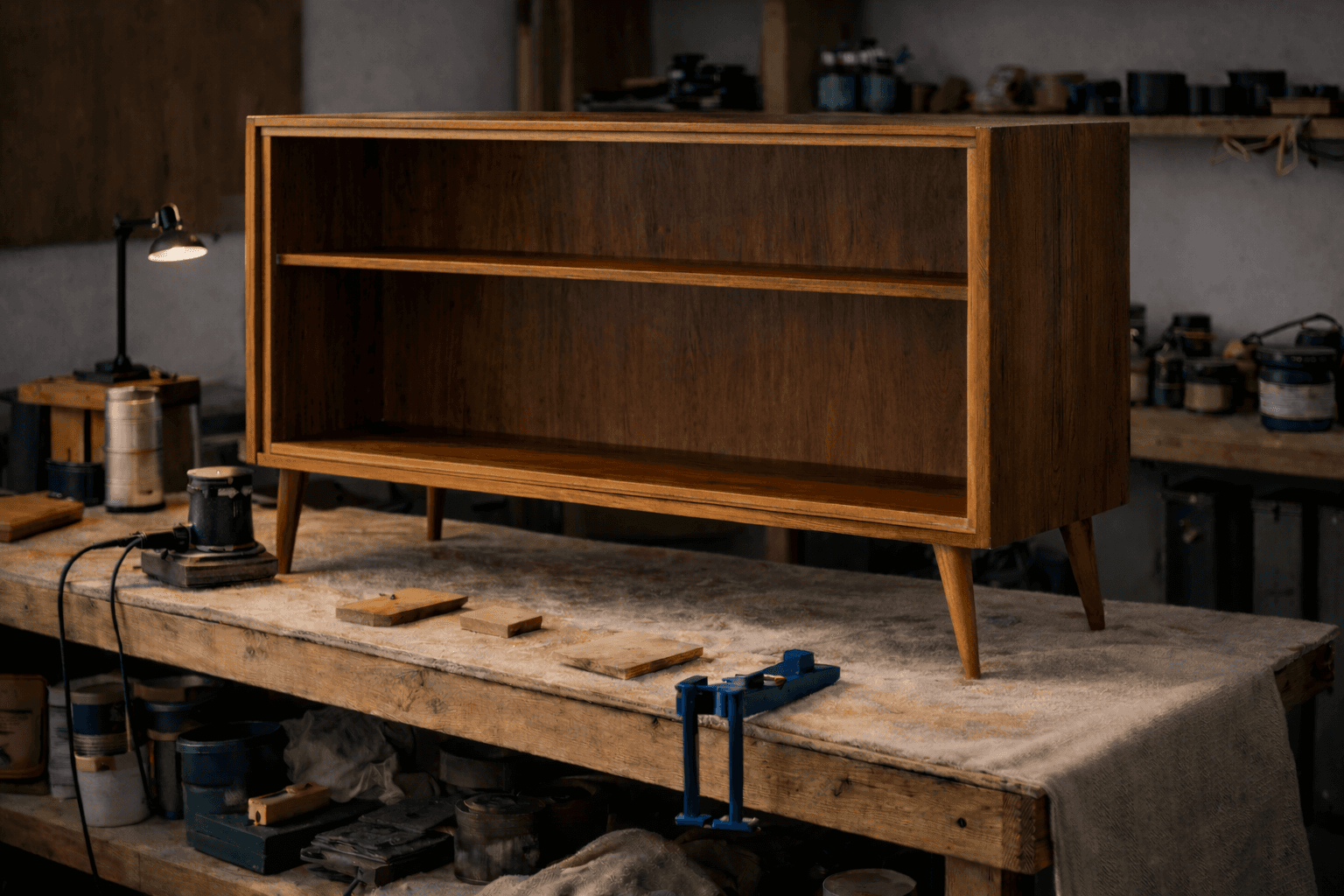
That labour doesn’t disappear just because it isn’t visible.
When someone offers half the asking price, it’s rarely about negotiation strategy. It’s about valuation. And that’s okay….not everyone values restoration work the same way.
But it does clarify something: not every inquiry is a customer.
A customer is someone who sees the piece, understands what went into it, and decides whether it fits their space and their budget. There’s room for conversation in that space. There’s alignment.
An offer that disregards the work entirely isn’t alignment - it’s a mismatch.
As a small, design-led business, I’ve learned that protecting your pricing is really about protecting your time. Discounting heavily to convert every message isn’t sustainable. It shifts the focus from craftsmanship to clearance. And that’s not why I do this.
Vintage furniture carries history. Restoring it properly requires respect - for the materials, for the original maker, and for the process. When you bring a restored piece into your home, you’re not just buying wood and hardware. You’re investing in preservation, skill, and intention. That work deserves to be valued accordingly.
We are allowed to protect our talent, our time, our work, and our margins. Not every piece is for every budget, and not every message becomes a sale. And that's okay, because the right buyers don’t need convincing.