Not every vintage piece can, or should, be restored to its original state. Sometimes the damage is too significant. Sometimes key components are missing. Sometimes restoring it would require fabricating a version of history that no longer exists. At a certain point, restoration stops being preservation and becomes reconstruction. And that’s where thoughtful transformation begins.
Restoration preserves original function. Transformation preserves design integrity. There’s a difference. When a mid-century record console no longer has its original electronics - when the wiring is unsafe, the turntable gone, the interior altered beyond repair, what exactly are we preserving? Not the engineering. Not the performance. What remains is the craftsmanship, the silhouette, the proportions, and the material itself.
In those cases, discarding the piece would erase more history than reimagining it. A record cabinet thoughtfully converted into a bar cabinet isn’t pretending to be something it isn’t. It’s extending its relevance. It allows the wood, the joinery, and the design language to continue forward, even if the function evolves. That isn’t trend-driven updating; it’s continuity.
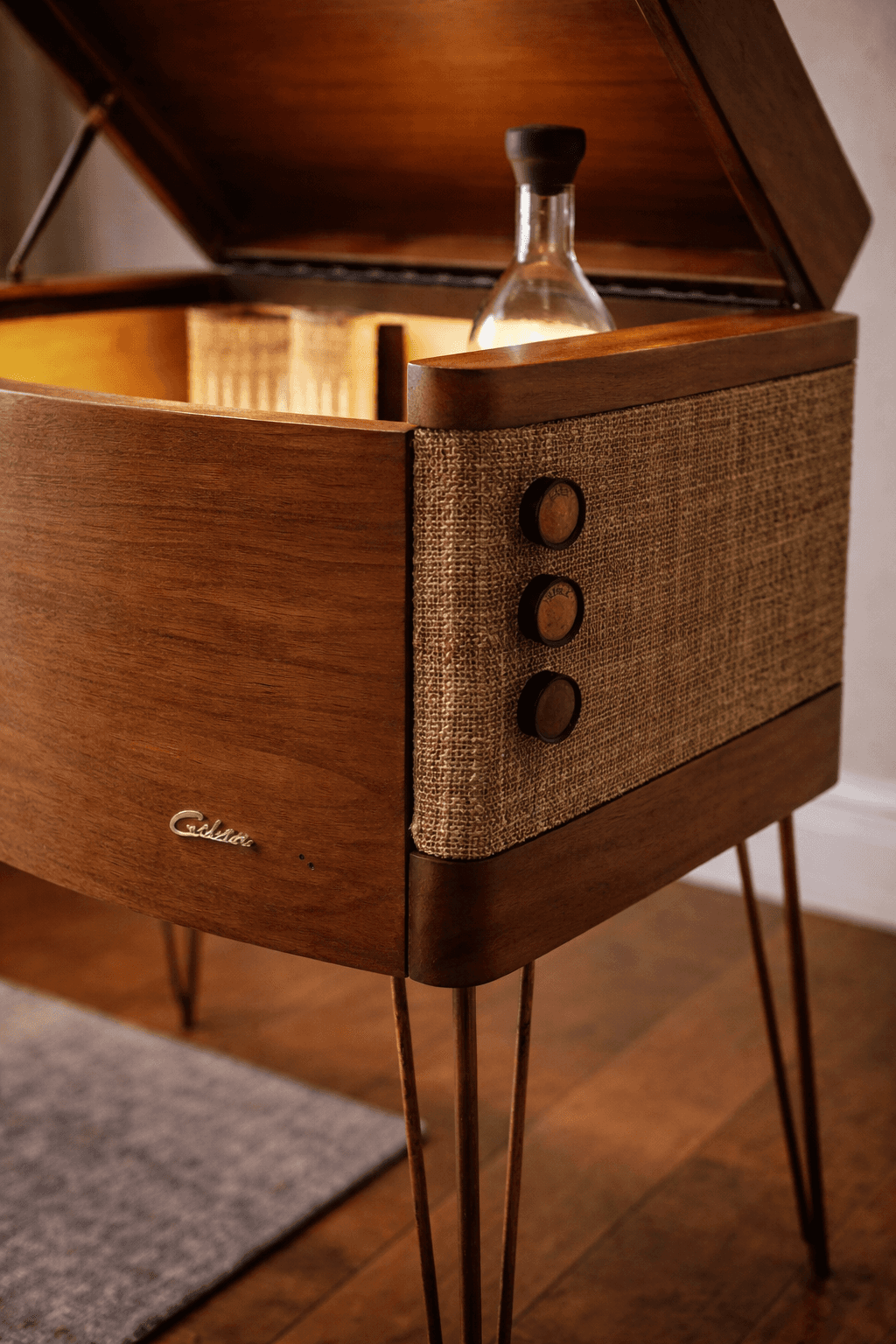
Thoughtful transformation isn’t about imposing a new personality onto an old piece. It’s about working within its existing architecture. The lines still lead. The proportions still matter. The materials still set the tone. When a new function feels natural, as though the piece could have been conceived that way from the beginning, the transformation has succeeded.
The goal isn’t to modernize history. It’s to give it longevity.