“Mid-Century Modern” gets used for a lot of things these days. But not everything from the 1950s or 60s is MCM, and not everything labelled MCM actually reflects the design principles behind it.
So what makes a piece truly mid-century modern? Here’s what to look for:
1. Proportion and scale
Mid-century pieces are typically:
Lower to the ground
Horizontally oriented
Visually lightweight
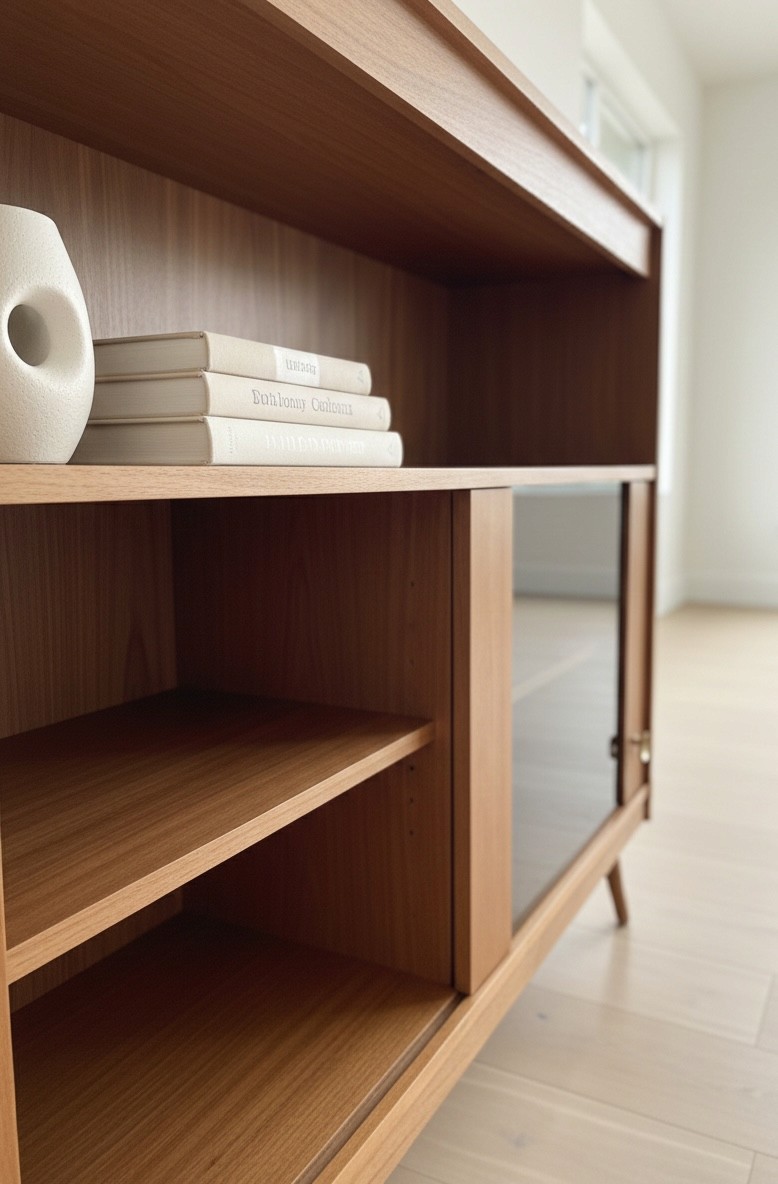
You’ll often see tapered legs, recessed plinth bases, or a “floating” case that lifts the body of the cabinet. If a piece feels bulky, top-heavy, or overly tall, it’s usually not MCM, even if it’s from the same era.
It's minimalistic with clean, intentional lines
MCM design moved away from ornament. You won’t see stuff like applied mouldings or carved flourishes, decorative scrollwork or heavy panel detailing. Instead, the interest comes from proportion and material, not embellishment. Flat drawer fronts, clean edges, integrated pulls, and simple geometry are common.
3. Function always comes first
Mid-century designers believed furniture should solve problems, not just fill space. Designers like Florence Knoll and George Nelson focused on usability as much as aesthetics because the beauty is in how well it works. Look for:
Thoughtful storage layouts
Divided drawers
Smooth drawer construction
Scaled proportions that suit modern homes
4. Honest materials
True MCM pieces highlight the material itself. Teak and walnut were especially common. Grain direction was deliberate. Veneer was often used strategically (not cheaply) to create continuous patterns and stability. If the wood grain feels intentional and consistent, that’s part of the design.
So what doesn't count?
A piece isn’t automatically MCM just because its brown, has skinny legs and is from 1962. Mid-century modern is about restraint, proportion, and functional design, not just age. Once you know what to look for, you start seeing the difference immediately.